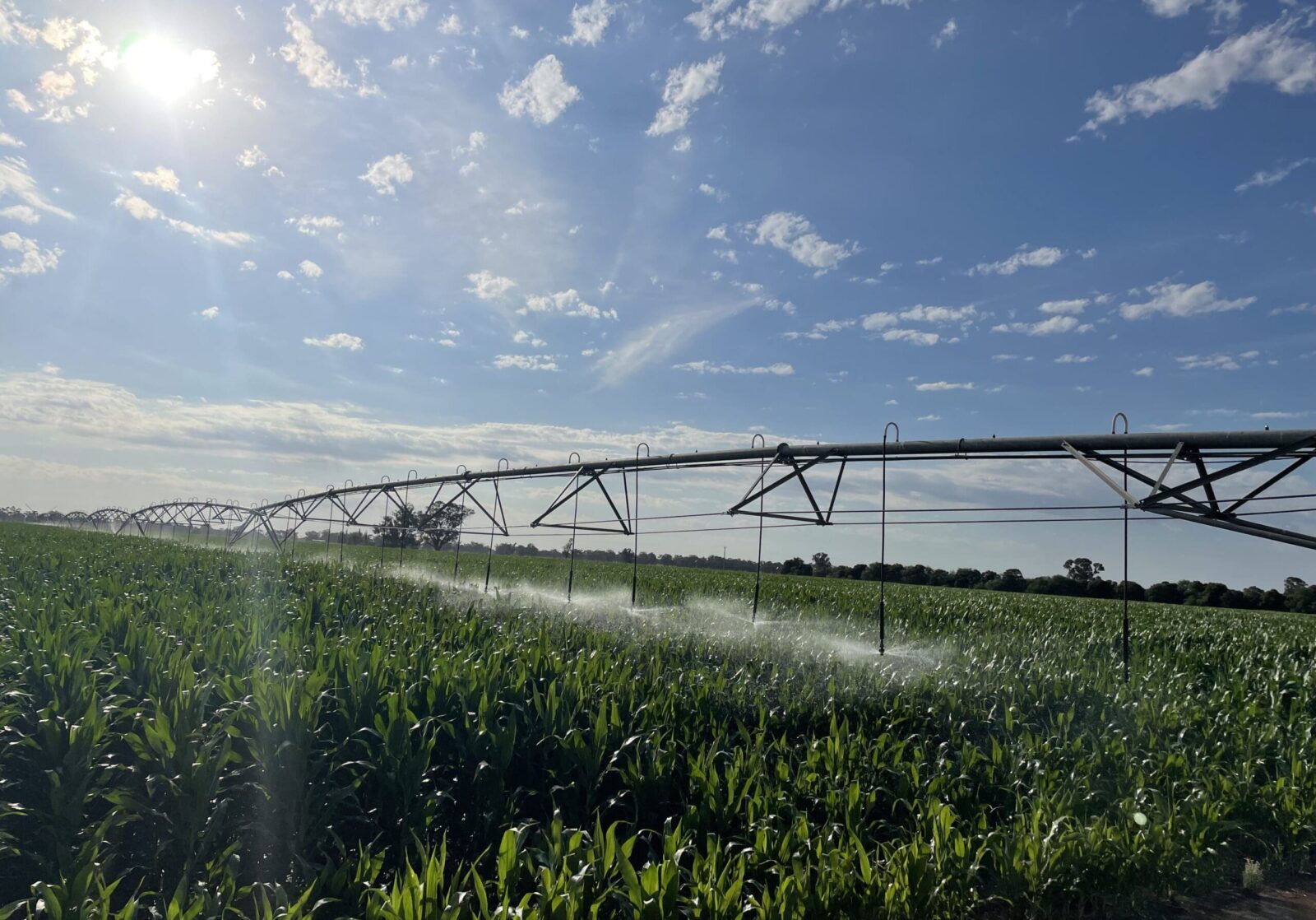
Protecting nitrogen shown to lift maize yield and profitability in northern Victoria and southern NSW
28 September 2026
Author: Reily Menhenett, Technical Agronomist, Incitec Pivot
In irrigated maize, warm conditions and water availability can increase the risk of nitrogen (N) loss through denitrification.
Results from replicated trials and commercial demonstrations conducted during the 2024/2025 and 2025/2026 seasons by Incitec Pivot, show that eNpower® treated urea consistently reduced N losses and, in many cases, delivered higher grain yields and profitability for growers, than standard urea.
Protecting N when it matters most
For irrigated maize growers, N loss is not simply a question of how much N is applied, but how much remains available to the crop when it is needed. Warm conditions combined with irrigation can create conditions favourable for denitrification, reducing the amount of applied N available for crop uptake.
This makes N management particularly important during the maize growing season, where rapid growth rates can lead to high rates of N being applied earlier in season, where crop uptake is low, but denitrification potential is high.
Figure 1 illustrates the N cycle and where eNpower® helps reduce N losses by slowing nitrification.
eNpower® contains Incitec Pivot’s patented nitrification inhibitor (DMPG), which slows the conversion of ammonium N to nitrate N. By keeping N in the ammonium form for longer, eNpower® helps reduce the opportunity for N loss.

Figure 1: Nitrogen cycle illustrating where eNpower® can help reduce N losses through denitrification. Source: Incitec Pivot.
What happened when N was protected?
Across replicated trials and commercial demonstrations conducted during the 2024/2025 and 2025/2026 seasons, eNpower® treated urea consistently held a yield advantage over untreated urea.
As shown in Figure 2, the yield response was observed across all trial locations, although the size of the response varied between sites. Across the dataset, the average yield benefit was 624 kg/ha, with a maximum increase of 2.5 t/ha. This dataset combines data from two replicated field trials and two commercial demonstrations – with between 2-5 treatment rates present. In total, 11 unique combinations of rate and product were investigated across the trials.
The response was also reflected in N use efficiency (NUE), with eNpower® treated urea delivering an average increase of 1.4 kg grain/kg N across the trials.

Figure 2: Yield response to eNpower-treated urea across maize trial locations in 2025/26. Source: Incitec Pivot.
What did the yield response mean for the bottom line?
Figure 3 shows the average net benefit recorded across the dataset, accounting for yield increase and the additional cost of the eNpower® coating. Across the trial set, the average increase in gross margin was $280/ha, with a maximum of $1,220/ha recorded.

Figure 3: Waterfall chart showing average net benefit of eNpower® over standard urea. Source: Incitec Pivot
What does this mean for maize N management?
The trial results reinforce three practical considerations for irrigated maize:
- Consider the conditions that increase N loss risk. Warm, irrigated conditions can increase the potential for denitrification, making N protection particularly relevant where these conditions occur.
- Look beyond N rate alone. N use efficiency depends not only on how much N is applied, but how effectively that N is retained and made available to the crop.
- Consider the economics of protecting N. Across this trial dataset, the yield response to eNpower-treated urea translated into an average gross margin increase of $280/ha, demonstrating the potential for N protection to deliver a measurable economic return.
The agronomic opportunity
Across replicated trials and commercial demonstrations in northern Victoria and southern NSW, protecting N with eNpower-treated urea delivered a consistent yield advantage over untreated urea, alongside improvements in NUE and gross margin across the trial dataset.
The results highlight the potential value of managing N loss risk in irrigated maize, particularly where warm conditions and irrigation increase the opportunity for denitrification.
For agronomists, the key consideration is not simply the amount of N applied, but how effectively that N can be retained and made available to the crop. Protecting N can be one strategy to improve the productivity and profitability of the N investment.
Further information
For more information, contact Reily Menhenett on 0474 093 167 or email: reily.menhenett@incitecpivot.com.au
Disclaimer
This is a guide only, which we hope you find useful as a general tool. While Incitec Pivot Pty Ltd has taken all reasonable care in the preparation of this guide, it should not be relied on as a substitute for tailored professional advice and Incitec Pivot Pty Ltd accepts no liability in connection with this guide.